
Worked example
What a tiled pattern looks like when it is done
Patternsplit is a web tool that converts one large PDF or DXF pattern file into tiled pages you can print on a normal home printer and tape together. The example below is a basic skirt: a single 594 x 729 mm PDF in, 12 A4 pages out, including a free assembly diagram. You can convert that same file yourself and it costs nothing.
No payment details required.
The short version
- Input
- One PDF page or one DXF file, at the full size of the pattern.
- Output
- Tiled pages with cut lines and alignment marks, plus a free assembly diagram on page 1.
- Paper sizes
- A4, A3, US Letter and US Tabloid.
- Cost
- This example costs 0 credits. Other patterns cost 1 credit per pattern page.
Before and after
A real pattern, not a mockup: the input, the assembly diagram, and all 12 pages it turns into.
The input
One sheet, 594 x 729 mm
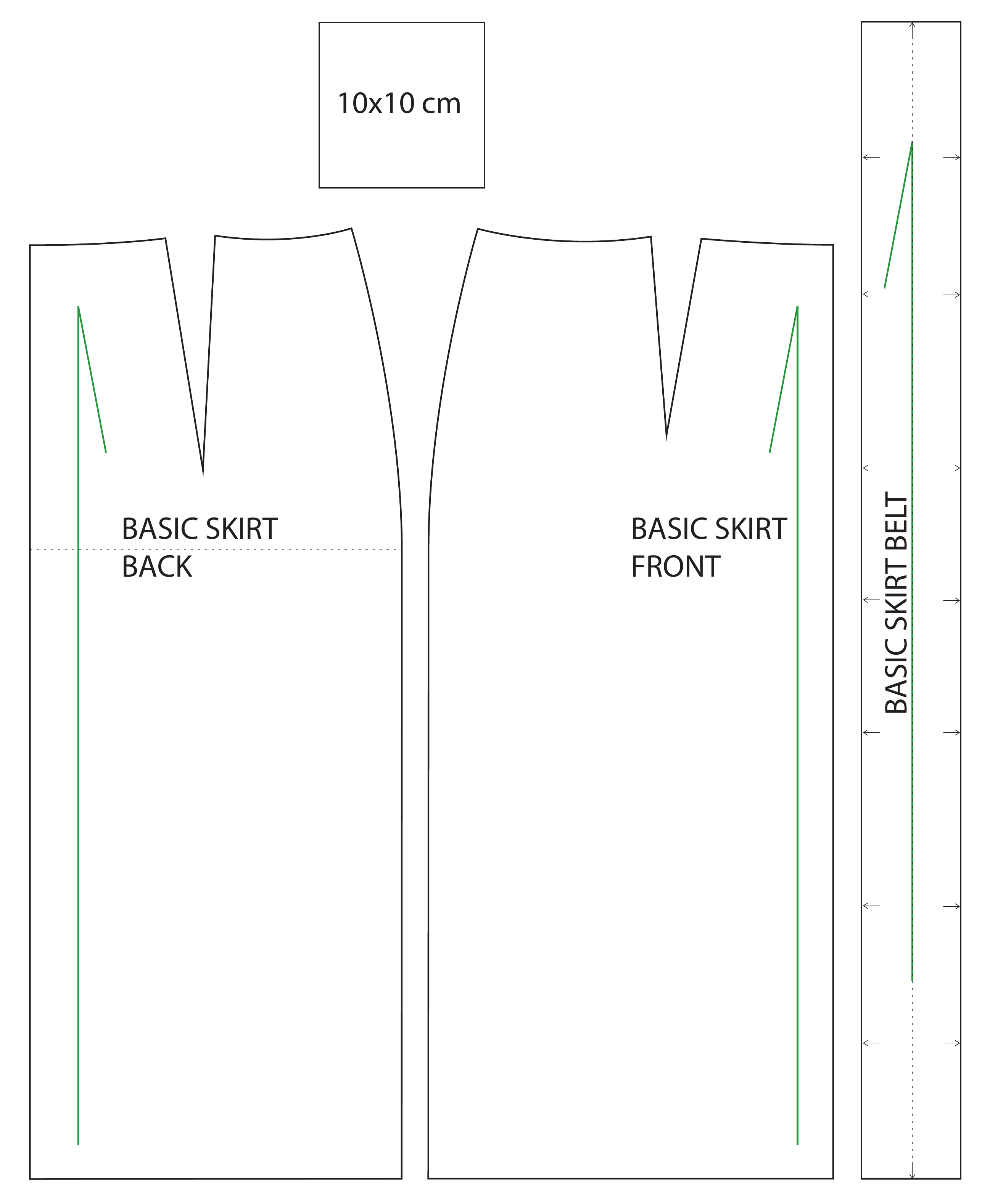
The basic skirt comes as a single large sheet: front, back and belt laid out together, with a 10 x 10 cm test square in the corner. That square is part of the pattern as it was drawn, not something Patternsplit adds; it is carried through into the tiled pages unchanged. This is how patterns are usually exported for a plotter or a copy shop. It is accurate, and it does not fit the printer at home.
Page 1
The assembly diagram
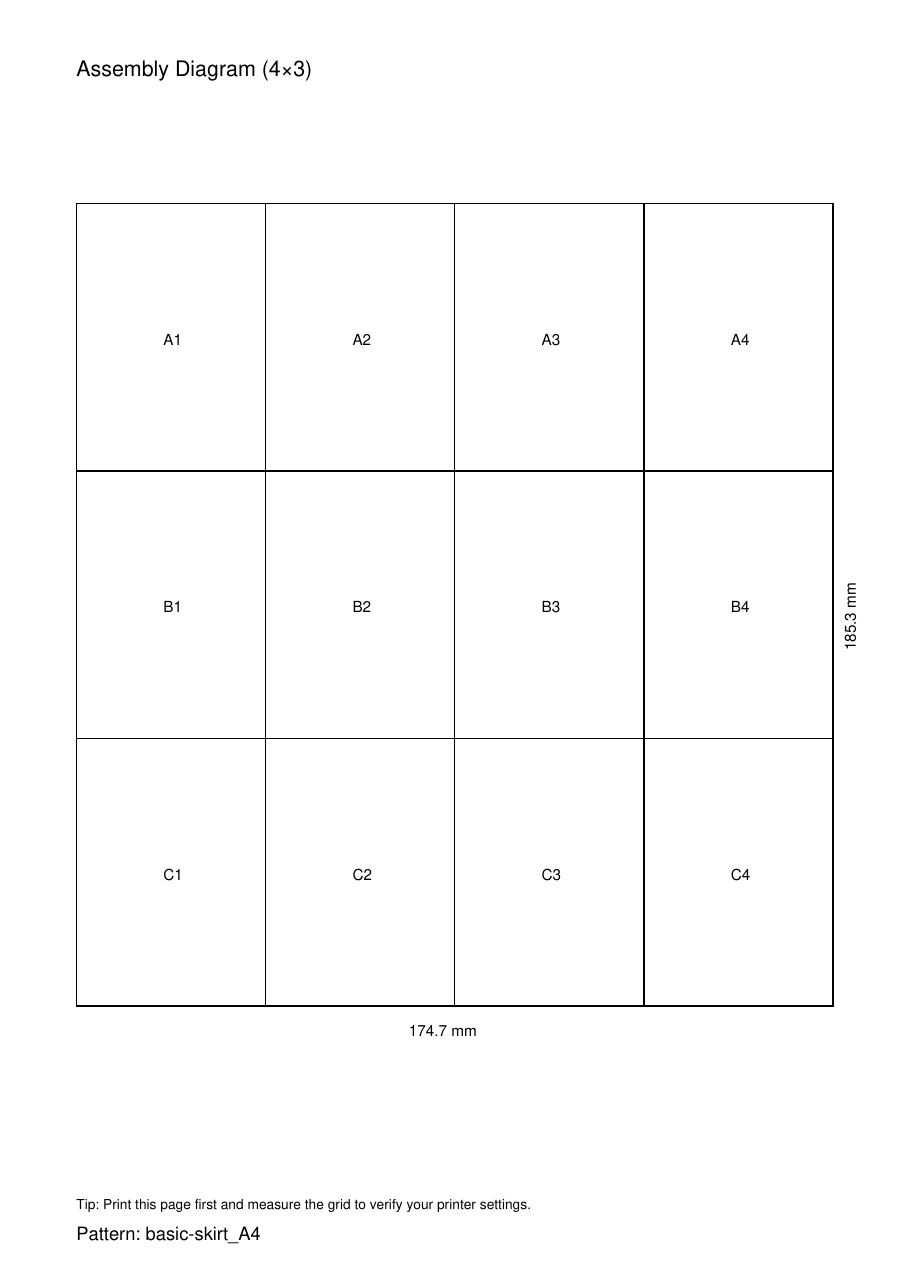
Every result starts with a map of itself. This one shows a 4 by 3 grid, so 12 pages, with the width and height printed underneath. Print this page first and measure those numbers with a ruler. If they match, your printer is set to Actual Size and the rest will line up. The assembly diagram is not counted in the price, but it is not a separate download either: it arrives as page 1 of the same file as the pattern pages.
Pages 2 to 13
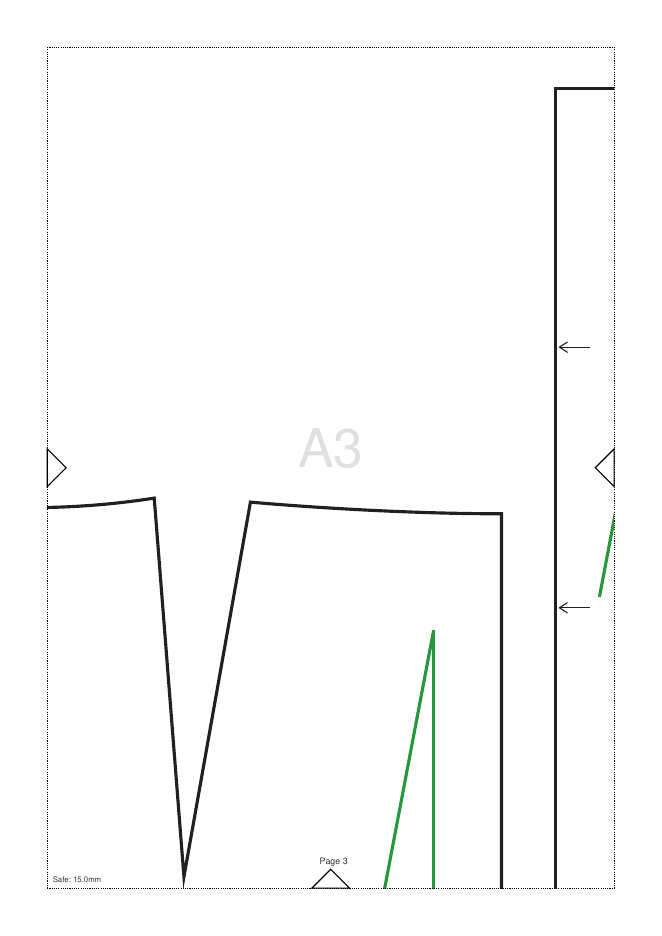
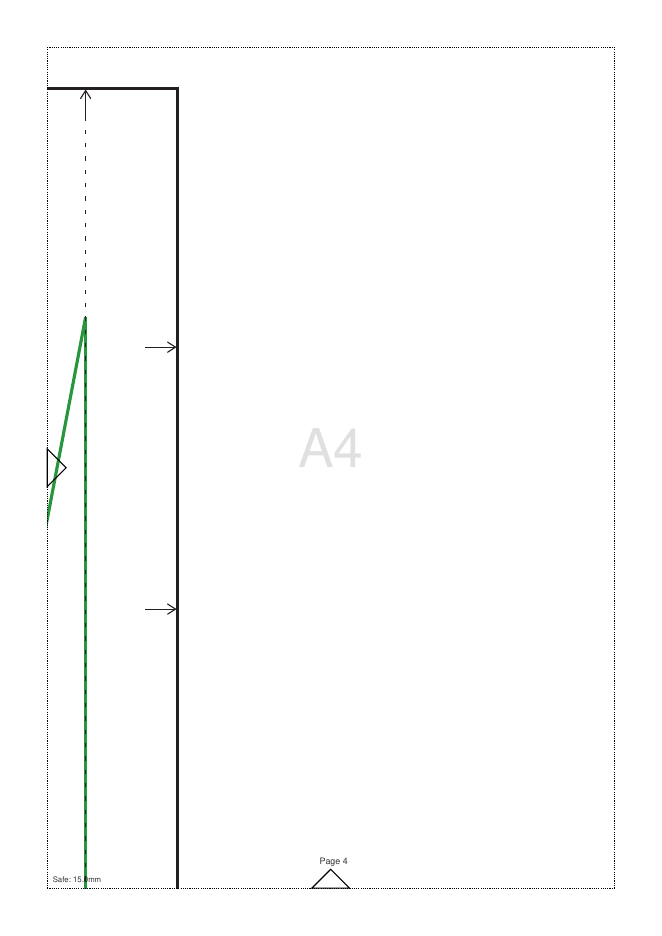
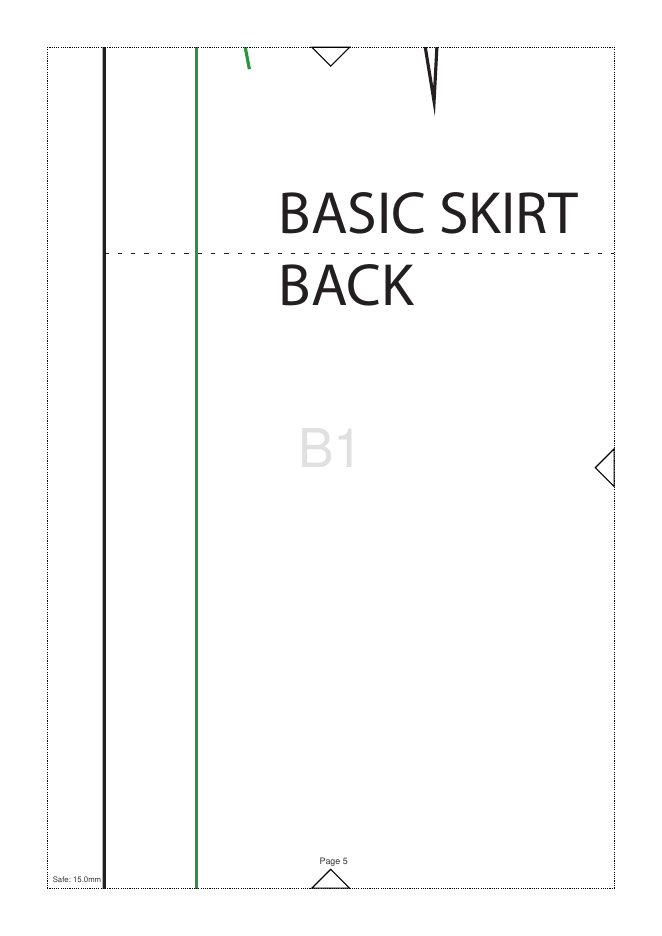
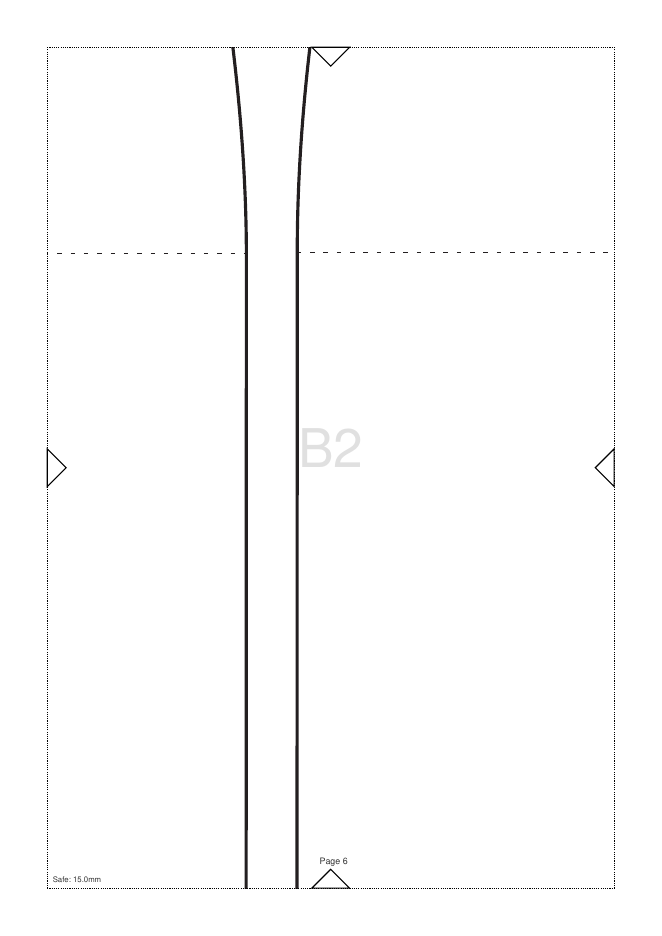
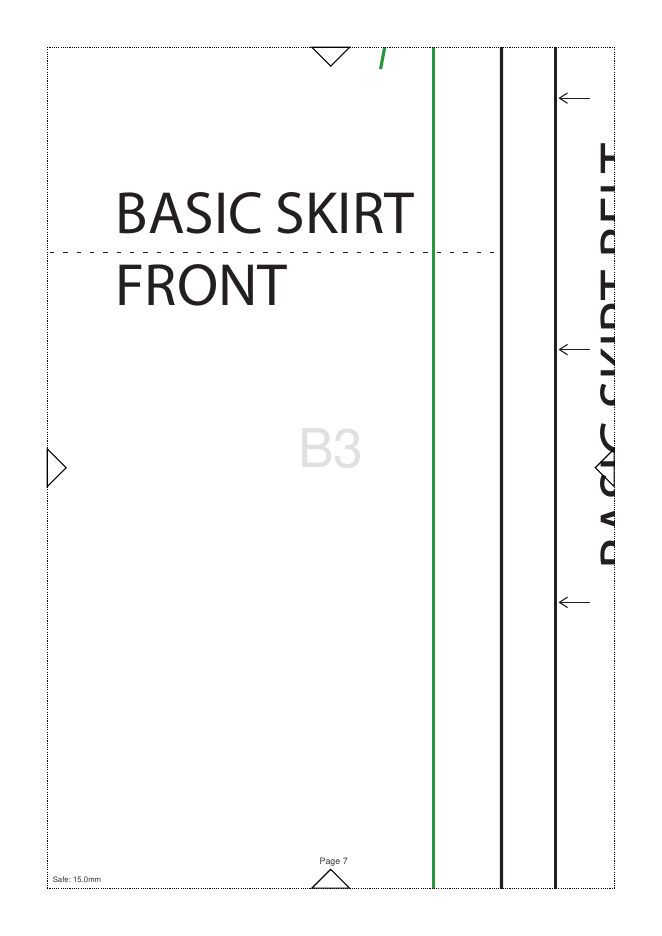
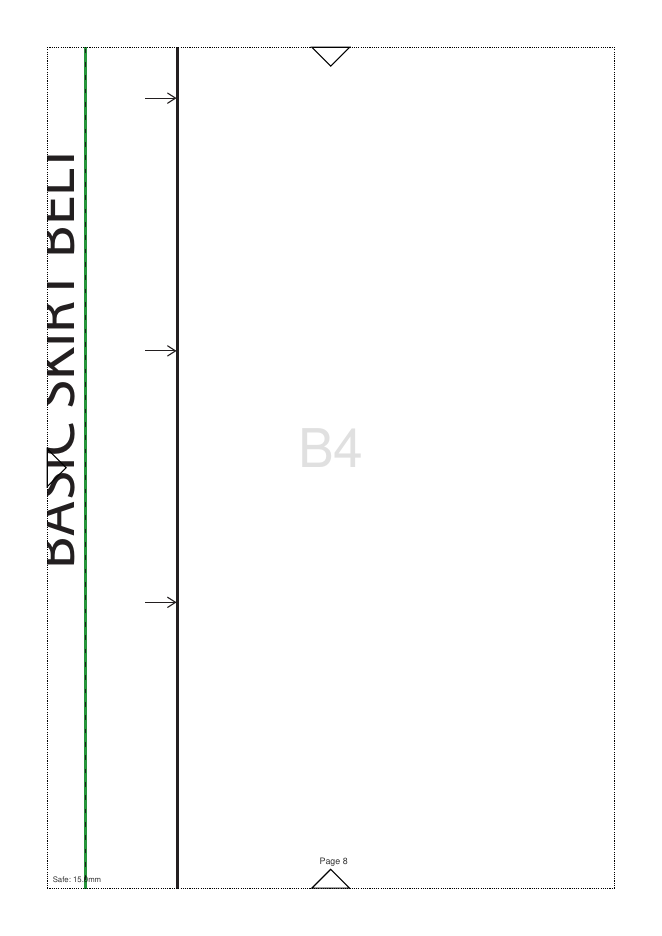
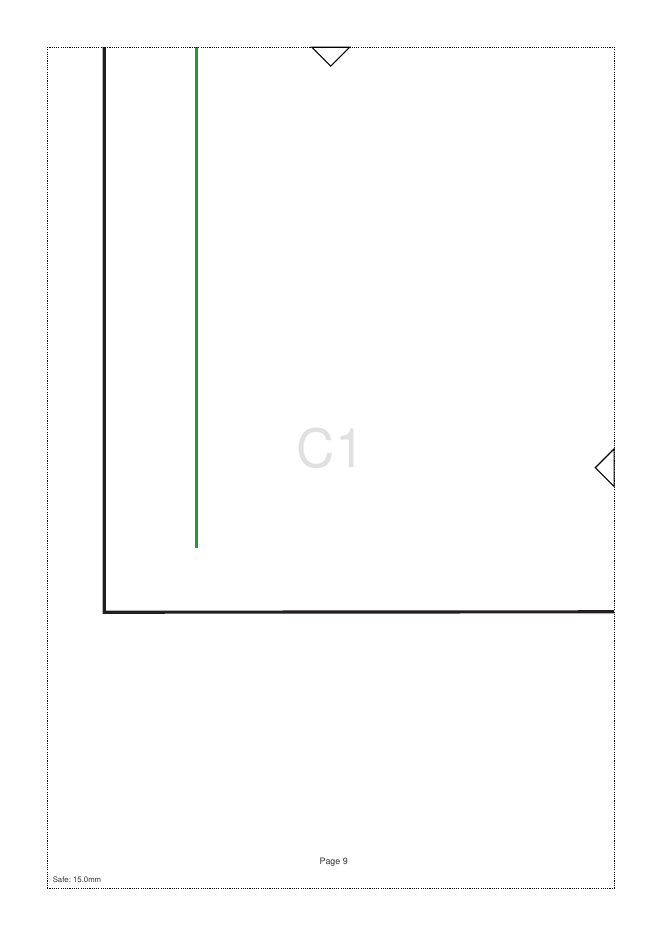
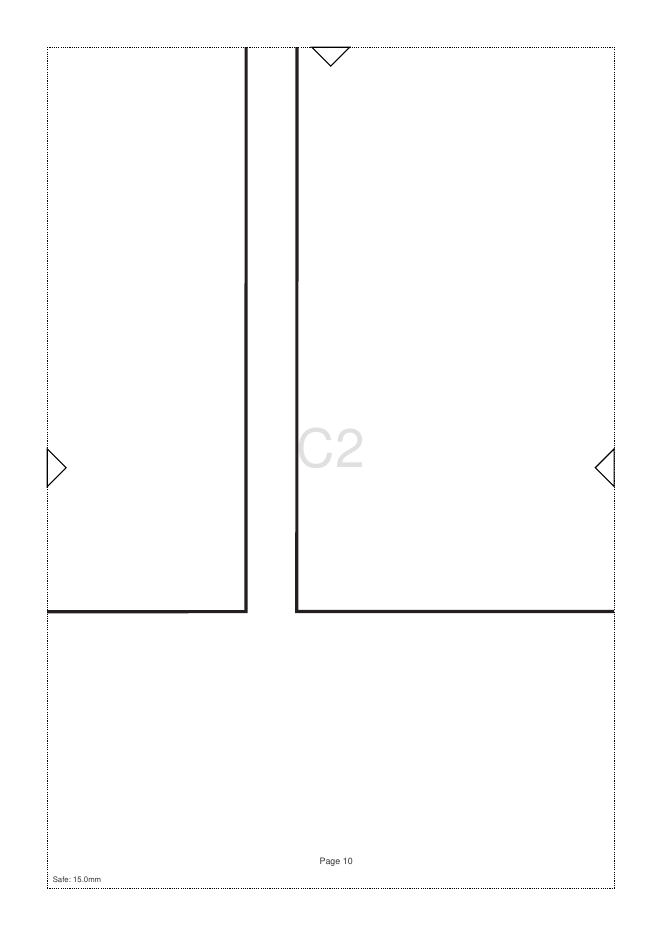
The pattern, split across 12 pages
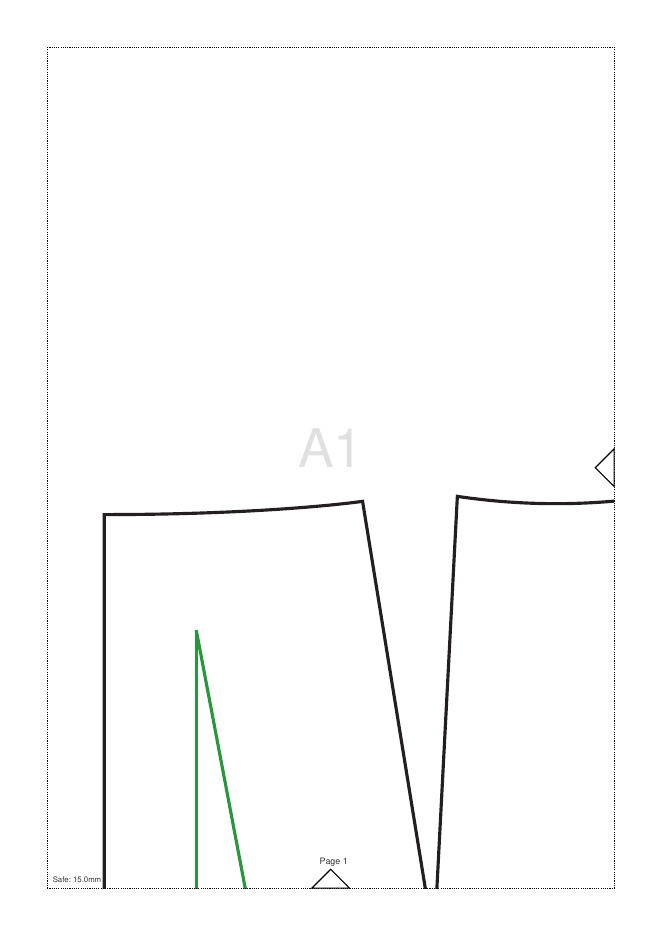
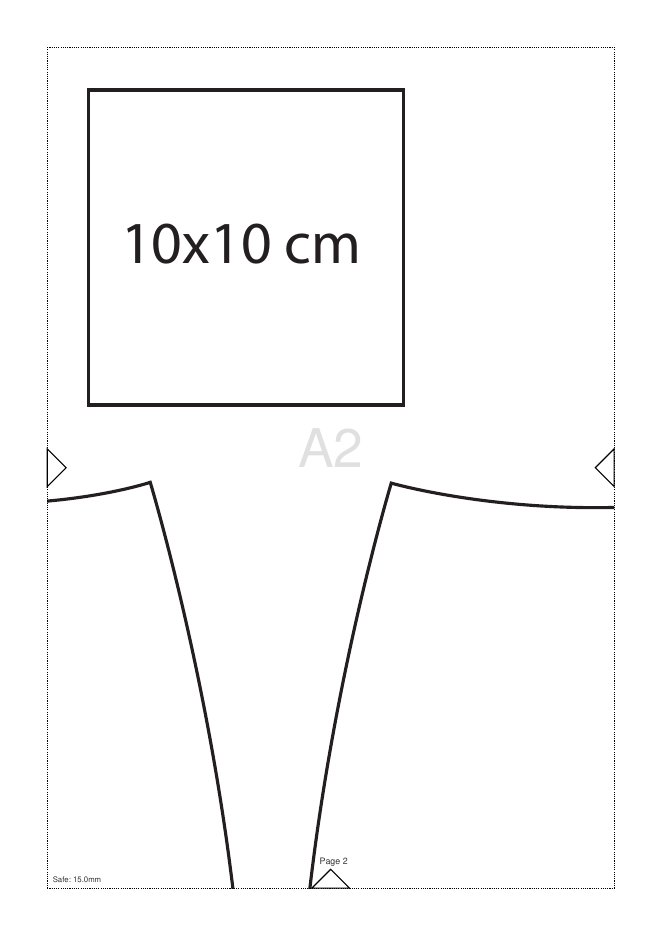
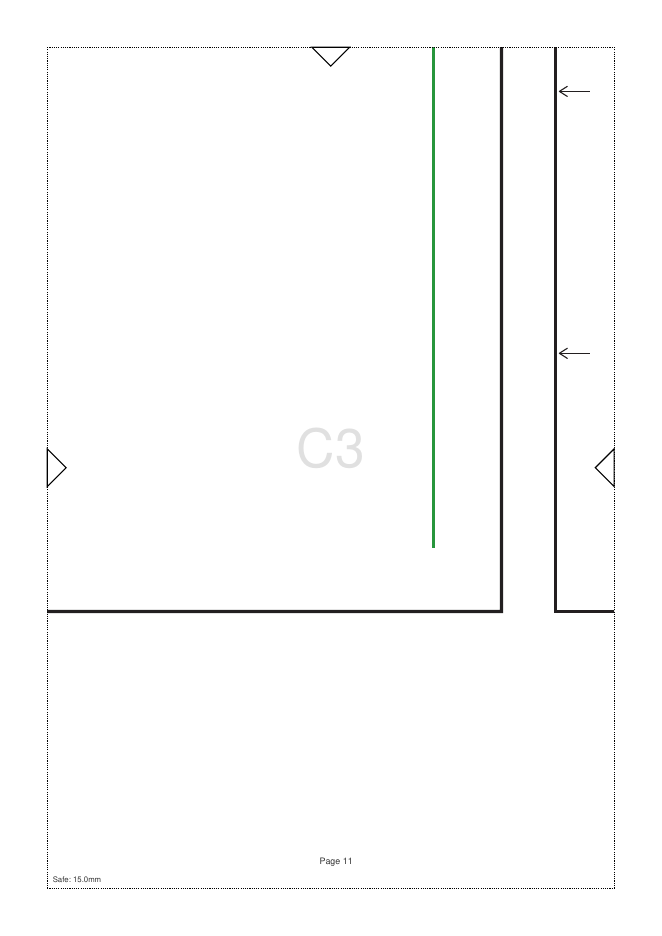
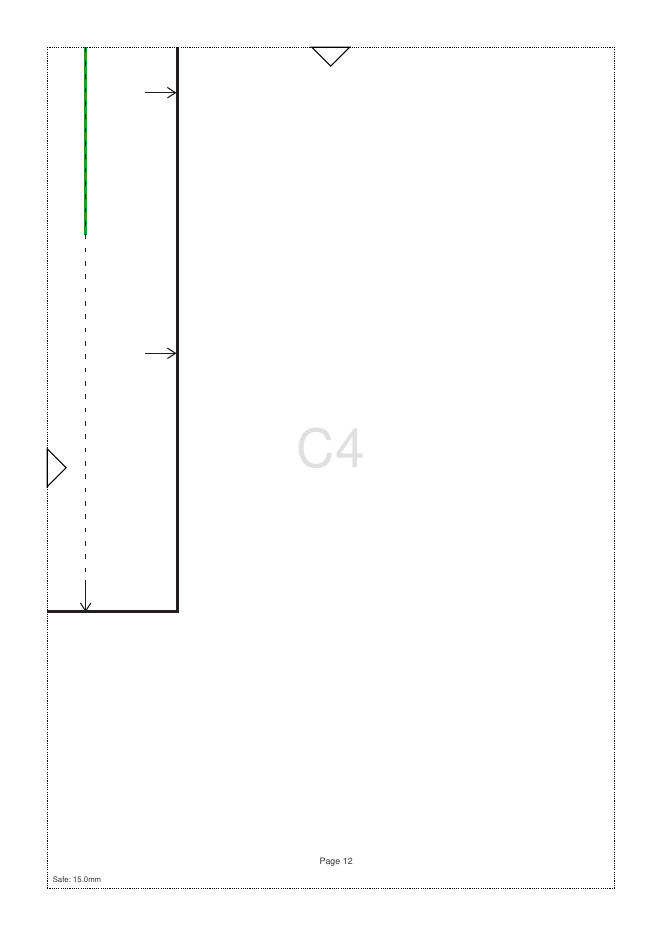
Each sheet carries its own cut lines, an alignment triangle for joining it to the next, and its position in the grid, A1 through C4. Trim along the lines and tape the sheets together to rebuild the original sheet. On A3 the same pattern needs 6 pages.
What this skirt needs on each paper size
You pay for pattern pages only. The assembly diagram is not charged separately; it comes as page 1 of the same download.
| Paper | Pattern pages | Credits |
|---|---|---|
| A4 (210 x 297 mm) | 12 | 12 |
| A3 (297 x 420 mm) | 6 | 6 |
| US Letter (8.5 x 11 in) | 12 | 12 |
| US Tabloid (11 x 17 in) | 6 | 6 |
Pattern shared by our pattern partner. Converting it in the free example run costs 0 credits.
How it works
Step 1
Upload a single page
Upload one PDF page or one DXF file, at the full size of the pattern.
Step 2
Choose a paper size
Pick A4, A3, US Letter or US Tabloid. Page 1 of the result is always an assembly diagram showing how the pages fit together.
Step 3
Print page 1 first
Measure the printed grid against the millimetre width and height on the page to confirm your printer is at Actual Size (100%). Then print the rest and tape the pages along the cut lines.
Not sure your printer keeps scale? Page 1 tells you, before you print the rest.
Frequently asked questions
Try the same file yourself
Download the basic skirt, convert it in your dashboard, and download the 12 tiled A4 pages plus the assembly diagram. You will see 0 credits on the confirmation.
Last updated 15 September 2026